
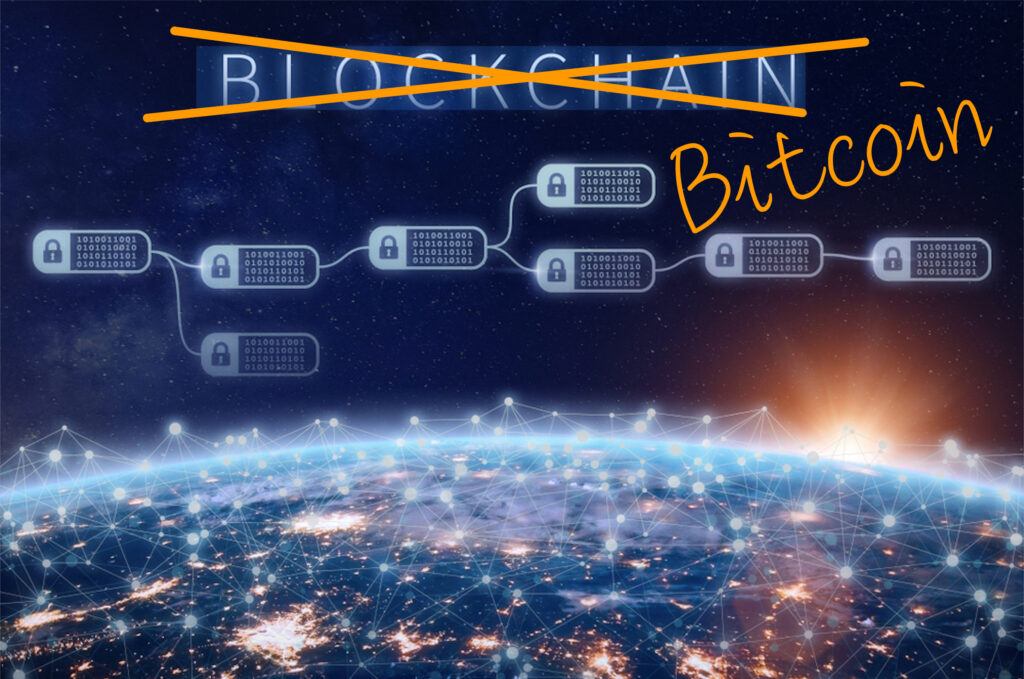
I have a friend who repeatedly tells me that Bitcoin is cool and all, but the real innovation is with blockchain technology. Bitcoin is a speculative investment that could go to zero, but blockchain will be around forever. My dad watches Fox Business and tells me about the blockchain companies he thinks I should invest in. You should sell some bitcoin and invest in blockchain companies that make real products! It seems like nobody around me wants to talk about bitcoin, but somehow, everyone believes in the blockchain story.
To be fair, Bitcoin is an extremely unique technology, so it takes a while to come around to the ideas behind it. Honestly, it took me a few years of study to really grasp the concept that blockchain is not in competition with bitcoin – blockchain is synonymous with Bitcoin.
4 Reasons We Don’t Need Blockchain
1. Enterprise Blockchain Doesn’t Make Sense

In this article, I want to make the case that the use of blockchain outside of bitcoin doesn’t even make sense, but let’s pretend for a moment that there was a potential for non-bitcoin blockchain. Even in this scenario, enterprise blockchain doesn’t even make sense.
The point of a blockchain is that it is self-verifiable. Blockchain is sometimes referred to as triple entry bookkeeping, referring to the concept of double entry bookkeeping. While double entry bookkeeping counts the equity and liabilities of a ledger system for a complete picture of a company’s finances, the third entry is to verify and cryptographically prove the accuracy of these entries with the blockchain.
The point of a blockchain is to be transparent, verifiable, and free from human error.
Companies do not always want to be transparent. Their daily operations are often proprietary, patented, and not for general public viewing. Even internally, there may be some operations that are vital to some departments, they may be not readily available for other departments to view and analyze. The transparency of blockchain runs counter to what’s in a corporation’s best interest in this case.
Verifiability of information could be seen as a possible use case of enterprise blockchains, but the question is verifiable to whom? With bitcoin, the global transparency of its blockchain is useful because anyone with a node can verify blocks mined by the miners, and the validity of their send and receive transactions. While 3rd party verifiability could provide some utility to some companies in some situations, that verifiability would likely not be open to the public, and then what would happen if the blockchain was not synced with human-led assessments? Are the meaty employees right, or is the blockchain right?
Companies do not want systems that cannot be fixed by humans. It’s well known within bitcoin that there are no “do overs”. It’s simply not possible. Once the transaction is confirmed in the blockchain, unless you have a couple of million ASICs and want to 51% attack the network to do a block reorg, your transaction is final. There’s simply no way to undo a bitcoin transaction. I fail to see how this would be a positive quality for enterprise blockchains.
When corporations make an error, they want to fix it. They don’t want to lock it in forever and just say, “Oh well, that’s just the blockchain!” Their bottom line depends on delivering the best performance possible – not the most unbreakable chain of verifiable events. In this way, blockchain works against businesses.





2. You Can’t Put Avocados On The Blockchain
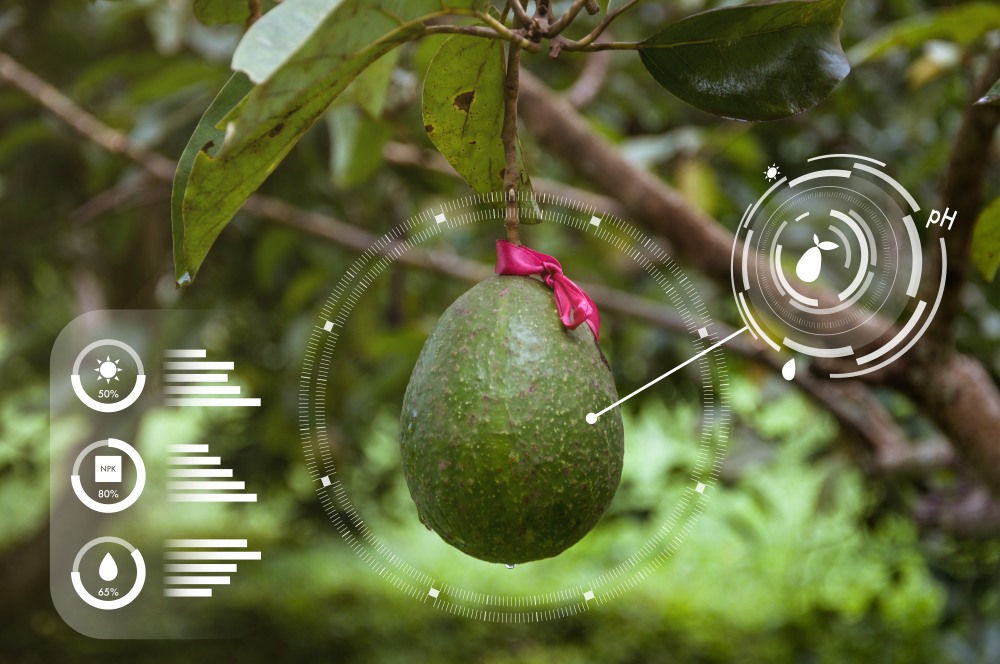
There was a famous news story from a few years back that there was some company who was going to leverage blockchain technology to track their avocado shipments to cryptographically verify the origin and path of their avocados to ensure their freshness. Of course, nothing ever came of this, but it’s a great example of enthusiasm for technology in a context that doesn’t really make sense.
On its surface, it sounds very cool: Just use blockchain to track the avocados so you can see how fresh they are when they arrive at the store. No human mistakes!
To reiterate the issues discussed above, why does this need to be on a transparent, immutable, public ledger? It seems to me, this would be easier to track on a centrally controlled database within the company. You can still see where the avocado came from, how long it took to get to its destination, and the employee at the grocery store can use their eyes and hands to determine which avocados should be put on the shelf.
More importantly, however, what do you do when the blockchain is wrong? Avocados are organic material. No two trees are no two avocados are exactly, 100% the same. Unexpected weather changes and unforeseen events causing delays mean that every shipment of avocados is slightly different from the last.
This means that every single avocado that has ever existed is unique and the conditions of every single avocado shipment ever can never be repeated.
What happens if the blockchain is compromised? If a hacker attacked the Avocado Blockchain and claimed to own a shipping container of fresh avocados, would they be the true and rightful owner of the physical shipment, since they now have possession of those avocado coins in their digital wallet?
Video: This Is Why You Can’t Put Real Estate On The Blockchain
The Map Is Not The Territory (Except With Bitcoin)
A blockchain can say anything it wants about avocados, but it doesn’t change the reality of the avocado in your hand. This concept is often described as “the map is not the territory”, meaning you can describe something as accurately as possible, down to the smallest detail, but the map is not the thing.
If you’ve ever eaten an avocado, you know how wildly their quality can vary, so even if the blockchain says it should be fresh and tasty, it might not be. A blockchain avocado is not a real avocado.
Bitcoin is unique because the map is the territory. There is no such thing as a physical bitcoin. Bitcoin only exists in the digital world. Things in the digital world do not exist as carbon and atoms. They exist as bits and bytes. Digital things are made up of information, so bitcoin is no different.
Because bitcoin is pure information, the map (description) and the territory (the thing) are one.
The case could be made that all digital currencies have this quality. With the exception of “backed” cryptocurrencies like stablecoins, is true that all digital currencies are pure information. So, could something like a Walmart Coin or Home Depot Coin make sense?
3. All Blockchain Monies Are Competing With Bitcoin

Bitcoin has value because it cannot be debased by a centralized entity. You know it won’t be debased because the network functions are decentralized. There are 50,000 nodes across the world, with miners in every jurisdiction on Earth. No single entity controls more than 50% of the hash rate, and there’s a very weak incentive to attack the network due to the high cost of attack.
When you own bitcoin, you have assurances that your bitcoin will not be debased, stolen, or changed.
You also have the freedom to interact with bitcoin under any circumstances. It doesn’t matter what your race or religion is, what your political leanings are, what language you speak, or anything else about you.
This is not an ideal situation for corporations. Corporations want control.
What happens if a criminal selling drugs starts using Walmart Coin? What happens if Home Depot Coin becomes the favorite currency of 3D printed gun makers? That’s bad for business. The first thing they’d try to do is stop these types of transactions from happening.
If they can stop the transactions, then your money is not universal, and why would I need a bag of Home Depot coins in a savings account when I can just save in something more immutable, neutral, and universal? I’ll just trade for dollars when I need them. Bitcoin wins.
If they can’t stop the transactions, then well, it’s no longer Corporate Coin. It’s now Global Coin, and how many people are going to be running Global Coin nodes or paying for electricity to mine for Global Coin? Again, Bitcoin wins.
So, nobody is going to buy Starbucks Coin, but what about Coffee Coin?
4. All Utility Tokens Are Gimmicks

Utility tokens are based on the concept that you could use specific blockchains for specific industries. There could be a Donut Coin to purchase all the donuts you need, and a Dentist Coin for all the cavities you get afterward.
I’ll be honest, I was swept up in the hype of utility tokens in 2017 as well, but in hindsight, I have a lot of questions about the value proposition of utility coins.
Can’t this just be solved by creating a voucher system with corporate cooperation? I don’t think an independent blockchain here adds any value. Starbucks, Dunkin’ Donuts, and Mcdonald’s can all launch Coffee Pass, where you can buy a gift card good for coffee at any location. Easy. Done. No blockchain involved.
Why would I pre-buy a Starbucks coffee token and take on the risk of team execution that can affect the value of the token? They are not crypto experts. They are coffee experts. There have been many contract exploits, chain reorgs, and other attacks on sophisticated blockchains over the years, and I’m not confident that Starbucks would be hiring an elite team of cryptography experts to secure their blockchain. I think gift cards work pretty well.
My main question here is why does a token with a fixed utility need a floating value? The value of the coffee I’m buying at Starbucks shouldn’t go up or down based on demand for the blockchain token. The price should go up or down based on supply and demand for the physical coffee itself. It simply doesn’t make sense to introduce a new value mechanism for speculation on the price of a digital coffee token that doesn’t have any connection to the physical coffee commodity itself.
As you dig deeper into the launches of these various utility tokens, it becomes clear that the incentive is not to create value. With pretty much all token launches, you’ll notice that there’s a team behind the launch, and they get a fat stack of pre-mined coins or access to cheap coins before the public sale. This way they get a fat payday after retail investors pile in, and they can sell their coins for a profit before the price dump.
So Why Does Bitcoin Get A Blockchain If Nothing Else Does?
Money is information. Money says, “This is how much I have, and that is how much you have.” Money is a sociological phenomenon that helps humans absorb and transmit information about the world around them. Money is how to store, track, and transfer value.
Money is a concept, but physical money is the verification system for the non-physical idea of money. There have been many types of physical moneys over the millennia, but the underlying technology behind each money was the ability to transfer information across time (store of value) and space (medium of exchange).
Because money is information, the potential for a digital money has always existed.
The trouble with digital money is that digital things can be duplicated at zero cost. Physical money has been the only choice throughout history because it was the only way to prevent duplication. I own a piece of gold, and nobody owns that same piece of gold.
Bitcoin’s innovation was that through the combination proof of work and blockchain, we were able to keep an accurate record who owes who what. It was possible to independently verify, without a third party, that the money we owned was not duplicated somewhere else.
Satoshi’s major innovation was distributed PoW – not “blockchain” – yet half this industry still thinks PoW is the problem that needs to be corrected. They are horribly misguided.
Matt Odell [source]
Verifiably scarce digital information was the invention. Bitcoin is what we call it, but it could have been called anything else, and the concept would be the same. Bitcoin uses blockchain to make sure every single bitcoin transaction is legitimate, and you can trace the history of every single bitcoin transaction back to the point the coins were minted on a block.
Bitcoin is blockchain because blockchain is only useful for information scarcity utility. Money is information and no other competing money will outpace bitcoin. A next bitcoin just isn’t going to happen.
Further Eduction
Frequently Asked Questions
Is Bitcoin Different From Blockchain?
Bitcoin is different from blockchain because it has more features in addition to the blockchain itself. It combines blockchain, the difficulty adjustment, Hashcash proof-of-work mining algorithm in a single system we know as the bitcoin network. A blockchain alone is simply an order of transactions kept in an online ledger. There are many different types of blockchains and methods of maintaining blockchain integrity.
Who Owns Blockchain?
Nobody owns or has a patent on “blockchain”, the idea, but there are some specific use cases or styles of blockchain that have been patented by their parent companies.
What Came First Bitcoin Or Blockchain?
The idea of “a chain of blocks” being used in encryption technology goes back decades, so some core elements of blockchain were around for a long time before bitcoin. However, blockchain as we understand it today – a distributed ledger system for issuing crypto assets – was invented along with the invention of bitcoin. They are one in the same.
Who Invented Blockchain?
Blockchain technology and some aspects of bitcoin such as proof-of-work were invented and used prior to bitcoin, but our modern definition of blockchain was invented by Satoshi Nakamoto. There have since been many variations on distributed ledger technology and blockchain with their own inventors, but they all stem from the invention of the Bitcoin blockchain.
How Many Blockchains Are There?
There are tens of thousands of blockchains used by different cryptocurrencies and companies.
What Is A Timechain?
In Satoshi’s original whitepaper, there was no mention of the word “blockchain”. Actually, the word “time chain” was used, because bitcoin is a way of keeping track of the order of (timing) of transactions, which is organized in a chain of blocks.




 20+ Games That Pay Bitcoin (*REAL* Sats!)
Leave a Reply